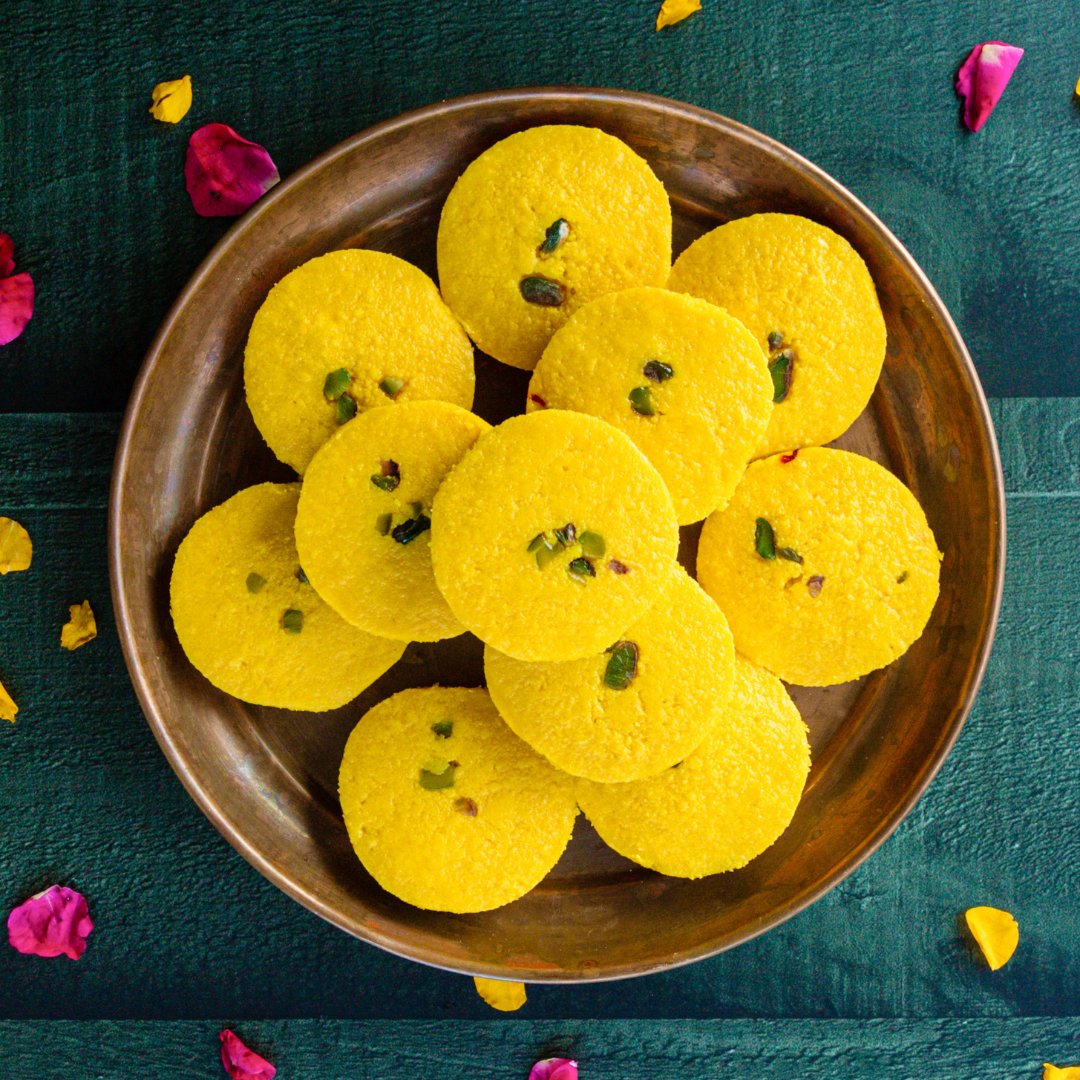
Indian sweets, popularly known as mithai, are the bedrock of the country’s culinary heritage.
With a wide variety of sweet culinary options available, milk-based sweets have been under the spotlight since time immemorial because of their creamy textures and rich and irresistible flavors.
These sweets are made with milk, khoya, and paneer, and with some other specific condiments depending upon the region, offering a taste of tradition in every bite.
Whether you’re craving a festive treat or a comforting dessert, this ultimate list of the top 25 milk-based Indian sweets will guide you through India’s sweetest offerings.
What Are Milk-Based Sweets?
Sweets in India are made with different methods and different ingredients, but something that’s common in almost every sweet is Milk.
There’s a whole category dedicated to sweets that are made out of milk and its derivatives, such as khoya (reduced milk solids), paneer (Indian cottage cheese), or condensed milk.
These sweets are the charm of the Indian diet and cuisine, quite often flavoured with cardamom, with saffron or sometimes rose water with toppings of nuts like pistachios, cashew nuts, bellam kajus, almonds, and more.
Mithai are popular across different regions by various specialities and are an integral part of festivals like Diwali, Holi, and weddings.
Top 25 Milk-Based Indian Sweets
Let’s dive into some of the top best milk-based sweets famous across different regions in India.
1. Gulab Jamun – King of Indian Sweets
Gulab jamun, the king of Indian sweets and the most beloved Indian dessert, is a crowd-pleaser with its soft texture, round shape, and sweetness. These golden-brown fried balls are made from khoya and flour, along with a touch of cardamom.
They are deep-fried at specific temperatures, then soaked in sugar syrup infused with saffron and rose water and usually served warm or at room temperature.

Pic credits: Pexels
2. Rasgulla – West Bengal King
Rasgulla, popularly known as “Roshogulla”, is one of the famous Indian delicacies hailing from the province of West Bengal.
‘Ras’ means juice, and ‘gulla’ depicts a ball; that captures its juicy essence.
It’s a quintessential Indian sweet that is usually round, spongy, and crafted from chhena (fresh paneer), kneaded until a smooth texture is achieved and then gently boiled in a sugar syrup. Rasgullas are essential sweets for weddings, celebrations, and many other festivities.

Pic Credits: Pexels
3. Ras Malai
Ras malai, the famous Bengali sweet treat, is a perfect blend of texture, flavor, and taste. This Bengali dessert usually features a spongy texture and looks like soft chhena dumpling-like flat balls.
They are soaked in sweet, thick milk and garnished with saffron, rose water, and cardamom.
The word “Ras” means juice, which gives it the creamy essence, and “malai” is a derivative of milk, which gives it the luscious effect.
They are usually garnished with slivers of almonds, pistachios, and nuts.
Serve chilled for the best experience. Its rich flavor makes it a go-to for special occasions like Eid.

4. Kalakand—Rajasthani Delight
Kalakand has its roots originating from the Alwar region of Rajasthan. It is a fudgy, melt-in-mouth delicacy made from fresh cheese (paneer) and condensed milk, often studded and filled with almonds and nuts.
Kalakand is cut into small square pieces with its soft and fudgy charm.
It is usually topped with nutritious pistachios and cashew nuts. These are usually offered chillede during the wedding season in Rajasthan.
Kalakand embodies India’s love for indulgent, time-honored desserts, captivating with its soft, fudgy charm.

5. Barfi – Milky Fudge
Barfi is one of the most favorite delicacies for every age group and especially among kids. It is kind of a versatile milk-based fudge that comes in various flavors like coconut, khoya, besan, chocolate, almond (badam), and pistachio depicting regional diversity.
They are made purely with khoya and milk, often served in a small diamond-shaped form along with a topping of silver foil.

6. Peda
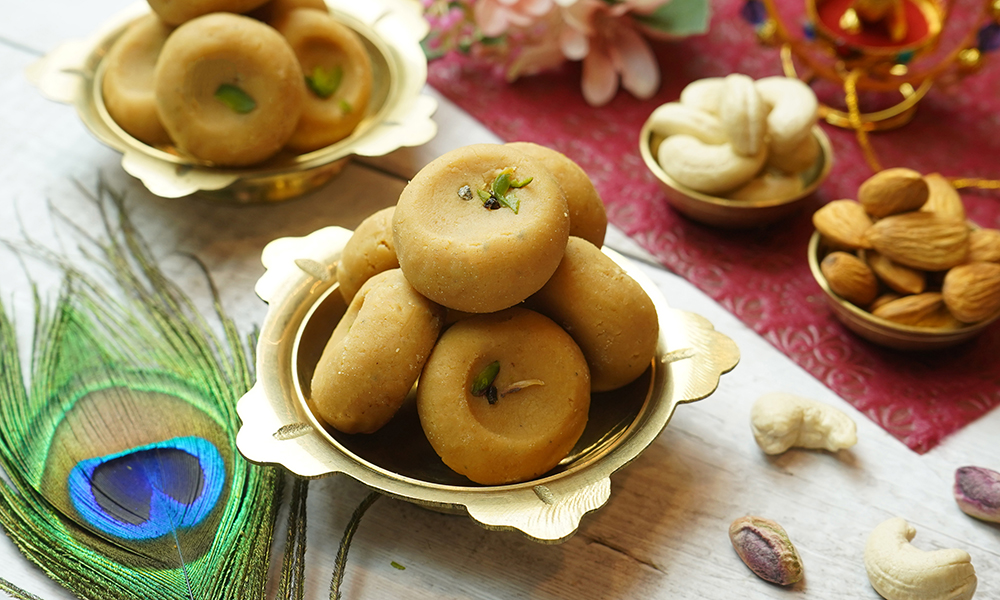
Peda, a soft, round sweet from Mathura, is made with khoya, sugar, and cardamom. Its crumbly texture and milky flavor make it a temple offering and a hit for Indian sweets online. Searches for Mathura peda spike during festivals.

Pic Credits: Chappan Bhog
7. Cham Cham – Bengal Delight
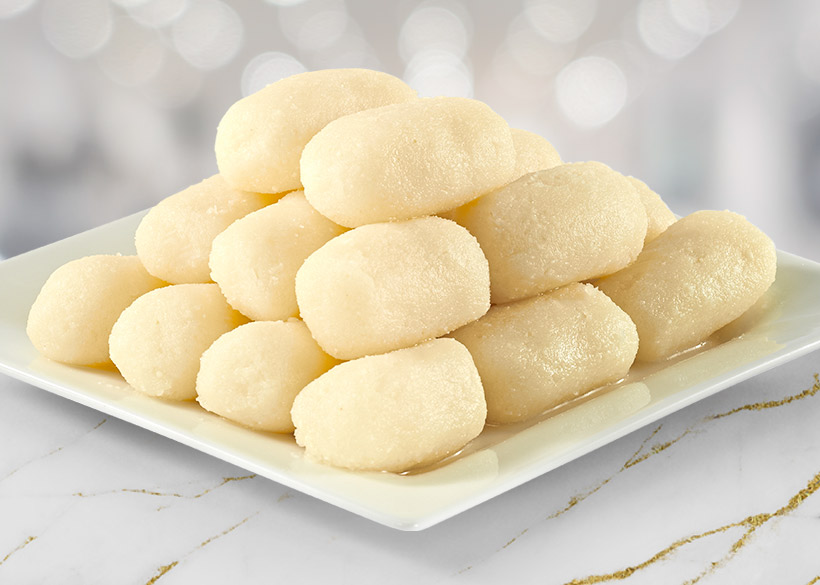
Cham cham, a Bengali delight, is a vibrant treat for the taste buds that captivates with a soft and spongy texture.
The core ingredients are fresh chhena, which are molded into cylindrical shape and then boiled in sugar syrup and stirred regularly with an infusion of rose water and cardamom.
It is often coated with fine fragments of coconut and khoya with a pinch of saffron cream. You can find cham-cham in Bengali weddings and festivals like Durga Puja in different shades like pink, yellow, and white.

Pic Credits: Tahoora Sweets
8. Sandesh
Sandesh, another Bengali gem, is a light, chhena-based sweet flavored with cardamom or mango. Its delicate, crumbly texture makes it a top choice for easy Indian desserts. Searches for sandesh recipes soar during Durga Puja.
Keep it fresh, as it doesn’t last long.
9. Basundi - Charm of the Western Ghats
Basundi, a luscious Indian dessert with its roots originating from Maharashtra, Gujarat, and some parts of South India, captivates dessert lovers with every spoonful.
It's a creamy, milky delicacy simmered slowly with sugar with garnishing from cardamom, saffron, and rose water.
Basundi is delicately sweet and has a nutty, crunchy texture.
They are often paired with puris and served chilled or a bit warm depending upon the choice of the guests.

Pic Credits: Gujarat Tourism
10. Kheer - Versatile Rice Pudding
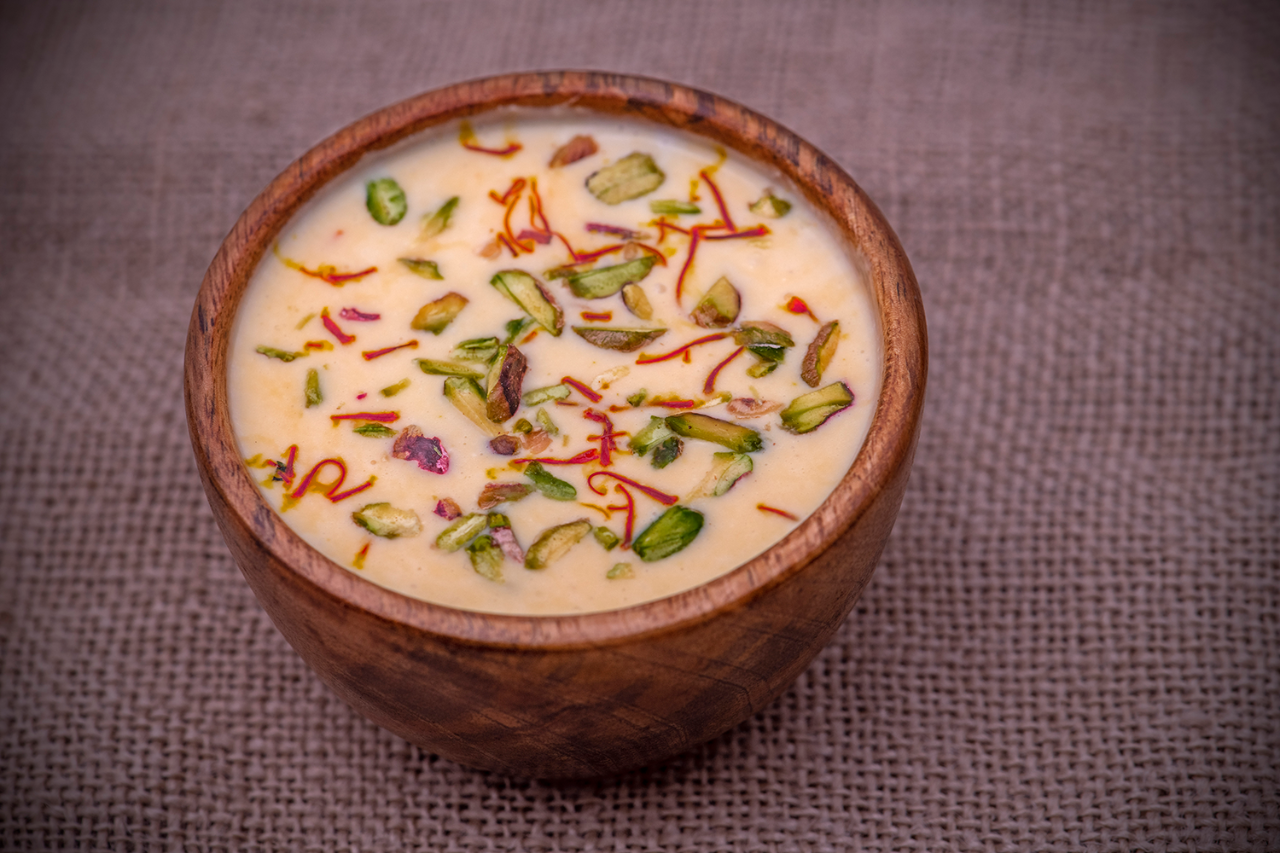
Kheer is one of the most cherished rice puddings in India. It’s a creamy dessert made with love and so much patience, which results in the soul-soothing indulgence.
It starts by simmering rice, milk, and sugar, later on stuffing and garnishing it with cardamom, almonds, pistachios, or raisins.
Kheer is extremely versatile in its nature, as it can be served hot for cozy and chilly winters; whereas, for summers, one can have it a bit chilled, making it the most comfortable food in Indian homes.

Pic Credits: Pexels
11. Mishti Doi - Iconic Bengal Dessert
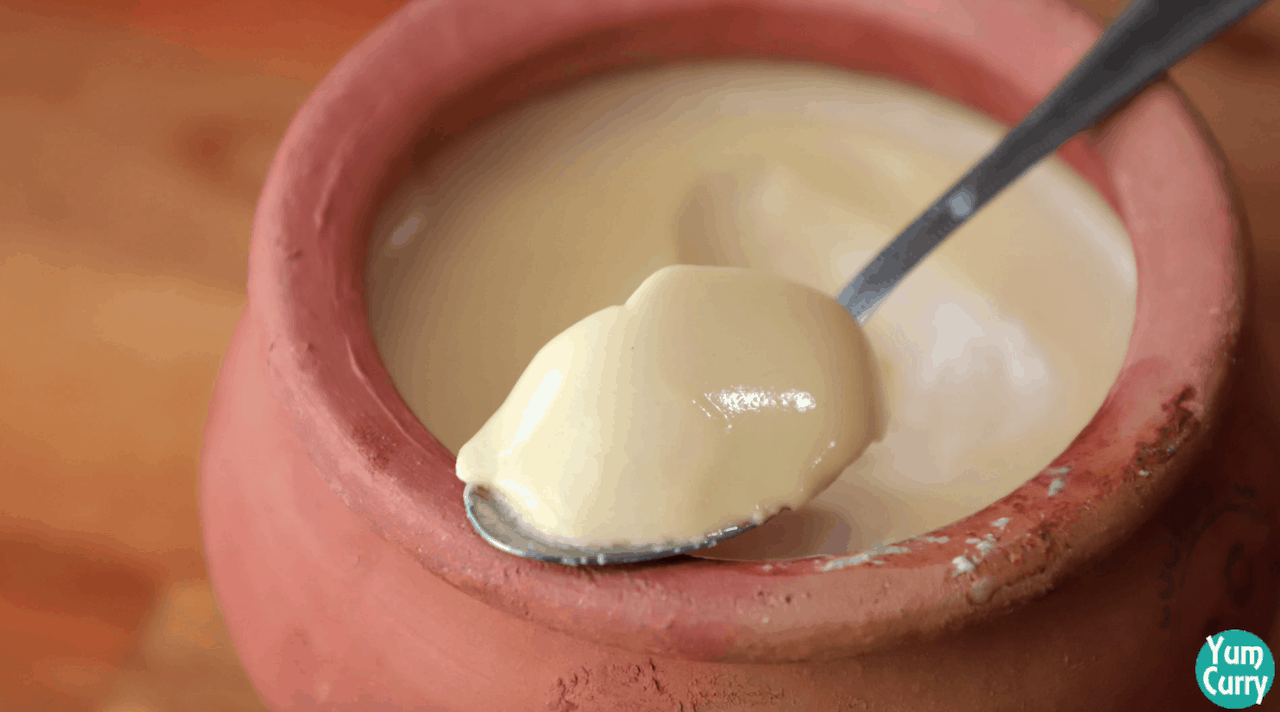
Bengal’s most celebrated and iconic yogurt sweet dish is the Mishti Doi. Mishti Doi or Dahi is a creamy, tangy delight sweetened with caramelized sugar or jaggery.
The trick of the trade for its preparation is that it absorbs a rustic flavor, enhancing its velvety texture by setting it up in little earthen pots.
A star of Bengali cuisine, mishti doi shines during Durga Puja and festive celebrations, pairing perfectly with luchis or savored alone.
Its rich, caramel-like sweetness makes it a top search for Bengali sweet dish recipes, especially in the autumn season.

Pic Credits: Mishti Doi
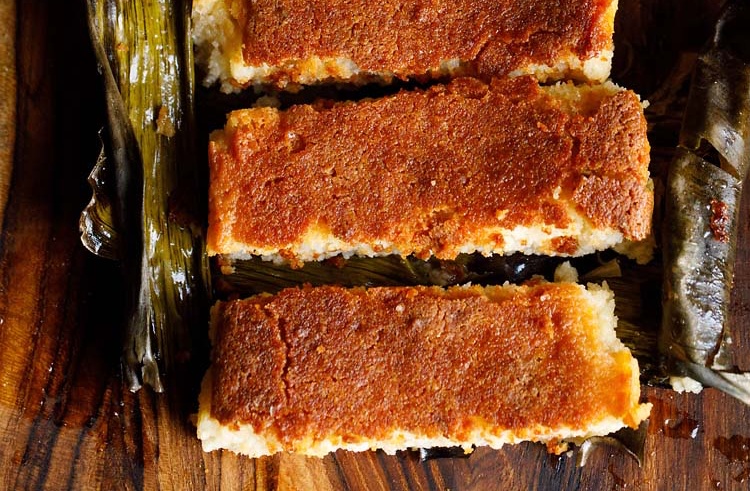
12. Chhena Poda - Burnt Cheese Dessert
Chhena poda has its roots in Odisha, where it is commonly known as ‘burnt cheese’ dessert. It is a baked delicacy made from chhena, sugar, and semolina, stuffed with nuts and cardamom.
Its soft golden crust, caramel flavor, and cake-like interior make it unique amongst all other Indian sweets.
Chhena poda was traditionally made and served on banana leaves because of its festive and spiritual connection to the famous Rath Yatra.

Pic Credits: Veg Recipes of India
13. Rabri - Northern Indian Favourite
Rabri, a North Indian delicacy, is a luxurious dessert of thickened milk layered with rich cream, slow-cooked with sugar, cardamom, and saffron. Its velvet-like texture and aromatic sweetness make it a festive favorite, often paired with jalebi or malpua.
Popular at weddings and Diwali, rabri garnished with pistachios or almonds, it’s a testament to patience and culinary finesse.
Rabri embodies North India’s love for decadent sweets, offering a creamy, soulful experience that elevates any celebration.

Pic Credits: Rabri
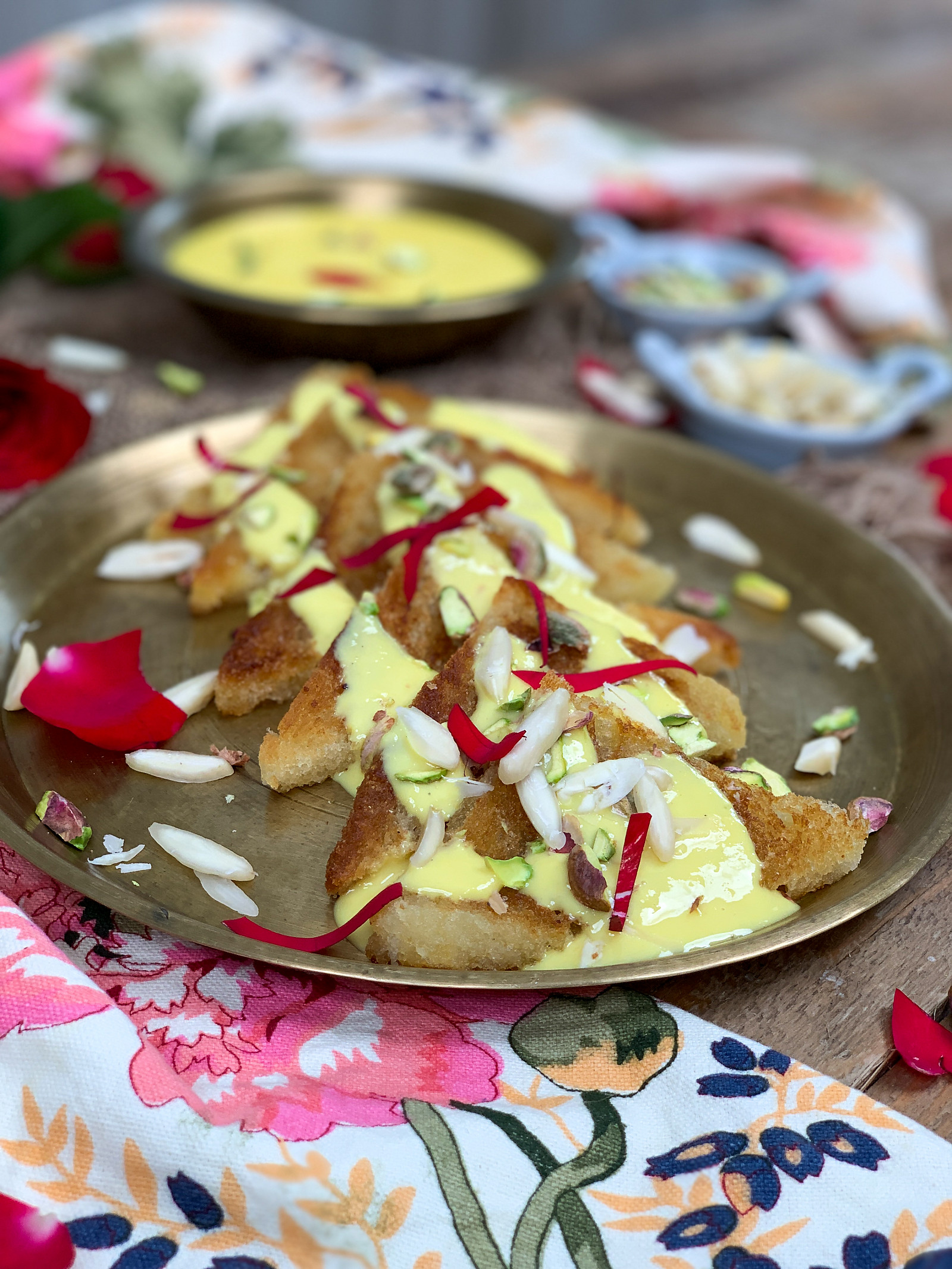
14. Shahi Tukda - The Royal Mughlai Dessert
Shahi tukda dates back to the Mughal period, which transforms fried bread slices by soaking them in saffron-infused, sweetened milk and topping them with nuts.
A star at Eid and weddings, shahi tukda’s rich, creamy profile fuels Mughlai dessert searches.
Shahi tukda’s blend of crisp bread and velvety milk showcases India’s royal treat, delighting dessert lovers with its indulgent charm and sweetness.

Pic Credits: Archanas Kitchen
15. Kulfi - Traditional Indian Ice Cream
Kulfi can be rightfully said to be the traditional Indian ice cream, a dense, creamy dessert made by simmering milk until thick, then freezing it in molds with flavors like mango, pistachio, or saffron.
Kulfi isn’t churned unlike ice-cream, and is served in the traditional style of sticks or slices.
You can generally see a dedicated stall at weddings just for kulfi or ice cream.
Kulfi’s refreshing sweetness embodies India’s love for frozen treats during summers, which gives all of us a nostalgic feel and a cooling experience altogether.

Pic Credits: NRI Vision
16. Lachha Rabri
Lachha rabri, a decadent North Indian sweet, elevates traditional rabri with its layered, creamy texture.
It is usually made the old-fashioned way by collecting malai (cream) during milk reduction; then it’s sweetened with sugar and flavored with cardamom and saffron.
Its indulgent, flaky layers are stuffed with nuts like cashews, almonds, or pistachios, making it a complete festive highlight. It is served chilled and sometimes paired with jalebi or puris, fueling the search for North Indian sweets.

Pic Credits: Kailash Sweets
17. Doodh Pak - Gujarati Pudding
Doodh pak, a Gujarati rice pudding, is a creamy, milky, and thick sweet dessert made after simmering rice in milk along with sugar, almonds, and saffron.
The differentiating factor between kheer and doodh pak is the thickness.
This one is more on the velvety and smoother side, and this consistency is usually obtained when cooked slowly on low flame.
A staple at Gujarati weddings and festivals, doodh pak’s nutty richness and subtle sweetness make it a top choice.

Pic Credits: YTimg
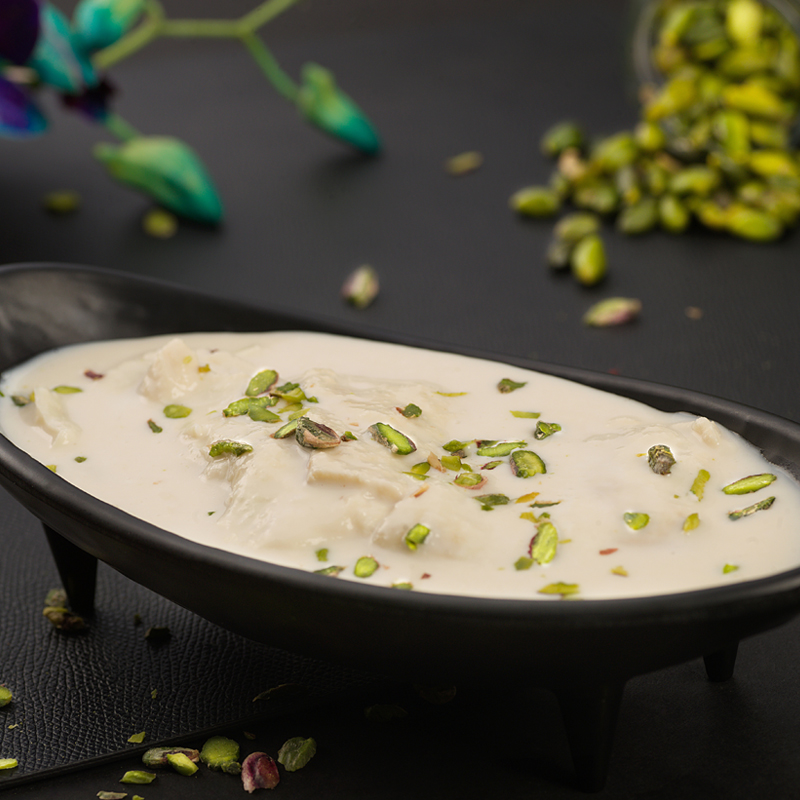
18. Paneer Kheer
Paneer kheer, a creative twist on traditional kheer, swaps rice for crumbled paneer, creating a richer, creamier dessert.
The process of making paneer kheer starts with simmering it in milk with sugar, cardamom, and rose water.
It offers a unique and velvety texture along with delicate sweetness.
This sweet is quite popular at festive gatherings; its innovative flavor drives searches for paneer dessert recipes.
Garnished and served chilled with almonds or saffron, paneer kheer balances paneer’s mild tang with aromatic notes.

Pic Credits: Aarti Madan
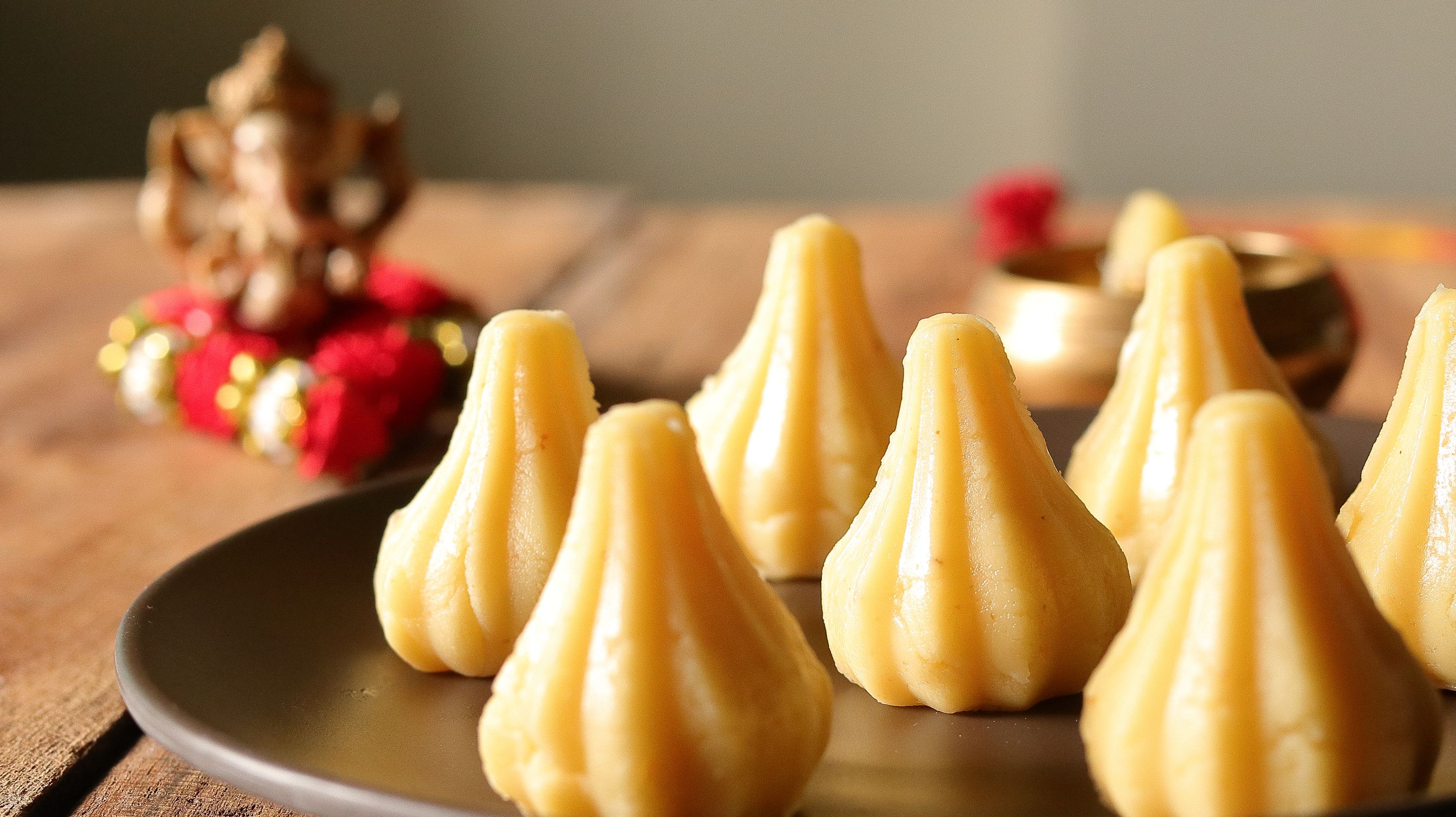
19. Khoya Modak - The Maharashtrian Mithai
Khoya modak, a Ganesh Chaturthi delicacy, is a divine dumpling filled with khoya, jaggery, and nuts, either steamed or fried. Shaped into intricate molds, it symbolizes devotion and festivity, spiking modak recipe searches during the festival.
Flavored with cardamom or saffron, khoya modak’s rich sweetness captivates devotees and dessert lovers alike.
A Maharashtrian and Goan specialty, it reflects India’s deep cultural ties to food and faith, offering a blissful bite that honors tradition while indulging the senses with its decadent, festive charm.

Pic Credits: Aarti Madan
20. Milk Cake - The Mawa Mithai
Milk cake, a fudgy, grainy sweet from Aligarh, is crafted by curdling milk, cooking it with sugar, and setting it into dense, caramelized slabs. Its slow-cooked, rich texture and milky sweetness make it a standout, driving Indian milk cake recipe searches.
Often studded with nuts, milk cake is a Diwali and Holi favorite, balancing intense sweetness with a melt-in-the-mouth feel.
It is usually served in small, decadent pieces, and milk cake captivates with its unique graininess.
21. Shrikhand - Flavoured Yogurt Dessert
Shrikhand, a creamy Gujarati and Maharashtrian dessert, is made from strained yogurt mixed with sugar, saffron, and cardamom.
Its thick, velvety texture, often garnished with pistachios or almonds, makes it a festive delight, especially during Gudi Padwa and Diwali. Served chilled with puris .
Fruit variations like mango (amrakhand) add modern flair to these sweet delights. Shrikhand’s delicate balance of tang and sweetness provides a cooling and indulgent experience in Western India’s culinary heritage.
22. Doodh Peda
Doodh peda, a quick and milky Indian sweet, is made from milk powder, condensed milk, and sugar, shaped into smooth, bite-sized rounds. Its simplicity and rich, creamy flavor make it a go-to for festivals like Raksha Bandhan.
Flavored with cardamom, saffron, and dry fruits it offers a delicate sweetness and velvety texture.

23. Kesar Malai Peda
Kesar malai peda, a luxurious festive sweet, elevates the classic peda with layers of khoya and cream and a pinch of saffron. Its golden hue and rich, creamy texture make it a Diwali and wedding favorite.
Fresh saffron infused vibrant flavor, while slow cooking ensures a melt-in-the-mouth consistency.
They are offered in an ornate round shape and decorated with pistachios and kesar malai peda that spark elegance with velvety kesar charm.

Pic Credits: Shree Mithai
24. Kharwas - The Rare Pudding
Kharwas is a rare and unique Maharashtrian pudding that is made from colostrum milk, giving it the amazing custard-like texture. Sugar acts as the major sweetening agent and is flavored with cardamom or saffron.
It undergoes a steam process where it turns soft and attains a jiggly-like consistency. After this, it is often garnished with different kinds of nuts and almonds.

Pic Credits: Blogger
25. Ghevar with Rabri - The Perfect Mix
Ghevar with rabri is the perfect example of Rajasthani culinary masterpieces. It is a crispy, disc-shaped sweet made from a flour batter, deeply fried, and then soaked in sugar syrup.
You’ll get to see toppings of rabri along with flavor-adding agents like cardamom and saffron.
You’ll get to see this during festivals like Teej and Diwali, driving Rajasthani sweets searches.
It is usually stuffed with nuts; ghevar with rabri balances crispiness with creamy richness, offering a perfect blend.

Pic Credits: Ghasitaram Gifts
Tips for Making Milk-Based Sweets at Home
To make authentic milk-based Indian sweets, stock up on essentials like full-fat milk, khoya, paneer, saffron, and cardamom.
A heavy-bottomed pan and wooden spoon are must-haves for even cooking. Avoid common mistakes like rushing the milk reduction process or overheating, which can lead to grainy textures.
Store sweets in airtight containers in the fridge for 3–7 days; freeze kulfi or peda for longer shelf life.
Essential Ingredients and Equipment
For milk-based sweets like kheer, rabri, or peda, one should always use full-fat milk for richness, khoya or paneer for texture, and sugar or jaggery for sweetness.
To enhance flavor and taste, cardamom, saffron, and nuts are used. To prepare these milk-based sweets, essential equipment and utensils are used, which includes a heavy-bottomed pan, wooden spoon, molds that can be used for shaping, and a strainer for paneer.
Common Mistakes to Avoid
While preparing Indian sweets, one needs to take care of many things to get the best results.
-
Avoid high heat to prevent milk from scorching and simmer the milk gently.
-
Don’t skip stirring, as it ensures even thickening.
-
Use fresh ingredients; stale milk or khoya ruins texture.
-
Don’t overcook, as it makes sweets grainy.
-
Measure ingredients accurately to balance sweetness and avoid a runny or overly dense consistency.
Storage and Shelf-Life Information
Storage is a big concern that needs to be addressed to maintain longevity. One should take care of the below-mentioned measures to maintain the shelf-life of sweets.
-
Store milk-based sweets in airtight containers in the refrigerator for 3–5 days.
-
Freeze kulfi or peda for up to a month, thawing in the fridge before serving.
-
Avoid moisture to prevent spoilage.
-
Use clean, dry utensils to extend shelf life, and consume within a week for optimal freshness.
Regional Variations and Specialties
India’s milk-based sweets vary by region. Let’s look at some of the regional varieties and their unique specialties. These regional specialties, enriched with local ingredients like jaggery or coconut, drive the Indian sweet market.
Each region’s distinct preparation methods make India’s desert landscape endlessly diverse.
And carrying on that legacy is India’s best sweets brand, G Pulla Reddy Sweets.
|
Region/State |
Sweet |
Unique Features/Specialties |
|
West Bengal |
Rasgulla, Mishti Doi, Sandesh |
Soft, spongy textures; use of chhena and caramelized sugar; earthen pot fermentation for mishti doi. |
|
Odisha |
Chhena Poda |
Baked chhena cake with caramelized crust, often wrapped in banana leaves for rustic flavor. |
|
North India (Uttar Pradesh, Punjab) |
Rabri, Lachha Rabri, Milk Cake |
Creamy, layered textures; slow-cooked milk with saffron; Aligarh’s grainy milk cake. |
|
Gujarat |
Shrikhand, Doodh Pak |
Thick yogurt-based shrikhand with fruit variations; creamy rice-based doodh pak with nuts. |
|
Maharashtra |
Kharwas, Khoya Modak |
Colostrum-based custard-like kharwas; modak with khoya filling for Ganesh Chaturthi. |
|
Rajasthan |
Ghevar with Rabri |
Crispy, honeycomb-like ghevar soaked in syrup, topped with rich rabri. |
|
South India |
Basundi |
Thicker, nuttier version of North Indian rabri, often paired with puris. |
Conclusion
Milk-based Indian sweets are more than desserts, and they are like a celebration of tradition and culture in different parts of the country.
Starting from the syrupy gulab jamun to the creamy shrikhand, these 25 sweets offer something for every palate. Whether you’re exploring Indian dessert or trying your hand at homemade mithai, this list is your ultimate guide.
Dive into the world of Indian milk sweets, or mithai, and savor the sweetness of India’s culinary heritage.